When Support for Nature Is High, Why Is Funding So Low?

Australians overwhelmingly support stronger action to protect nature. But new research reveals a stark reality - the funding simply isn’t matching that intent.

The Australian Land Conservation Alliance (ALCA) has, for the first time, systematically analysed how much is actually being spent on nature across Australia. Its Nature Spend Tracker Insights Report reveals a significant and persistent gap between what is needed to protect biodiversity and what is currently being invested.

Even with increased government spending, the shortfall remains substantial. In other words, meeting the scale of the biodiversity crisis will require more than public funding alone. It will depend on a broader mix of investment, including philanthropy, private contributions and community support.

Governments cannot act alone

The Nature Spend Tracker brings together federal, state, territory, philanthropic and private funding to establish Australia’s first national baseline for biodiversity investment. The findings are sobering.

Federal government spending on biodiversity was estimated at $649 million in 2025, with 91% concentrated in just five national programs.

To put that in perspective, it’s less than 0.1% of the budget, and a fraction of what’s needed. At the same time, Australia is estimated to spend $26.3 billion annually on subsidies that harm biodiversity - more than 17 times what is spent protecting it.

State and territory governments contribute a similar amount, around $635 million per year.

However, this figure includes a mix of biodiversity protection, environmental management and compliance activities, meaning the portion directly benefiting biodiversity is likely lower.

Against this, the scale of need is clear. The report estimates that Australia requires around $8.3 billion every year simply to protect and repair environmental damage - and this does not include the long-term costs of managing and restoring landscapes. Taken together, these figures point to a profound funding gap.

The role of philanthropy

Philanthropy is often seen as a way to help bridge this gap. Yet its current contribution to environmental protection remains relatively small. Data from the Australian Charities and Not-for-profits Commission suggests that around $250 million is raised annually by environmental non-profits.

According to the Australian Environmental Grantmakers Network, however, less than 4% of total philanthropic giving in Australia (and internationally) goes to the environment.

This reveals a disconnect; while Australians care deeply about nature, only a small proportion of charitable giving is directed toward protecting it.

Where organisations like BioDiversity Legacy fit

More than 60% of Australia’s landmass is privately owned or managed. Many threatened species depend on habitats outside national parks and public reserves, making private land conservation essential.

This is where organisations like BioDiversity Legacy play a critical role. By working with landholders, communities and donors, BioDiversity Legacy helps create pathways to permanently protect and restore ecologically-significant land. This work directly addresses the gap between widespread public support for nature and the resources required to safeguard it.

Turning support into impact

The findings from ALCA’s research make one thing clear - governments cannot meet this challenge alone. But there is a pathway forward. Through a combination of public investment, philanthropy and community action, it is possible to close the gap and secure meaningful, long-term outcomes for nature.

For those looking to contribute, supporting organisations like BioDiversity Legacy is one way to turn concern into action. Even modest contributions can help protect critical landscapes and the species that depend on them - now and into the future.

Help close the gap for nature. Donate to BioDiversity Legacy today.
What Will It Take to Scale Conservation Covenants in Australia?

In Part 2 of our series exploring landholder motivations for conservation covenants, we speak with leading researcher Dr James Fitzsimons about how covenants can be strengthened and scaled to deliver greater conservation impact across Australia.

As a values-aligned organisation, BioDiversity Legacy regularly attends Land Covenantors Victoria’s quarterly lecture series. The most recent events have featured prominent academics sharing insights from their research on covenanting in Australia — and outlining what can be done to encourage more landholders to take part.

In Part 1, we covered Deakin University researcher Dr Carla Archibald’s presentation on landholder motivations for covenanting. In this second instalment, we reflect on an important lecture by The Nature Conservancy Senior Advisor, Global Protection Strategies, Dr James Fitzsimons, examining the current state of covenanting in Australia and the critical role covenantors can play in securing the nation’s environmental future.

About the speaker

Dr Fitzsimons has spent over 27 years designing and researching the policy and governance settings that underpin effective private land conservation. A long-time covenantor who stewards land in Central Victoria, Dr Fitzsimons, has held roles with the Victorian Government, The Nature Conservancy, as well as adjunct research positions at Deakin University and the University of Tasmania.

During the lecture, Dr Fitzsimons placed covenants within a broader Victorian, national and international context, highlighting both their potential and the role governments must play if privately protected areas are to meaningfully contribute to Australia’s national biodiversity targets. Here are his insights.

Australia’s 30×30 target – and the looming gap

Australia has committed to protecting 30% of lands and fresh waters and 30% of its oceans by 2030, under the Kunming–Montreal Global Biodiversity Framework. Currently, around 24% of land is protected – up from just 7% in the mid-1990s. This growth came from:

  • State and territory reserve expansion
  • The National Reserve System’s targeted land acquisition program (now discontinued)
  • The globally recognised Indigenous
  • Protected Area program
  • Private land trusts and covenanting programs

However, to reach 30% by 2030, Australia needs to protect an additional 6% of land within five years. “There’s still a lot of work to do,” Dr Fitzsimons said. “Private land conservation will be essential if we’re going to get there.”

The role – and growth – of conservation covenants

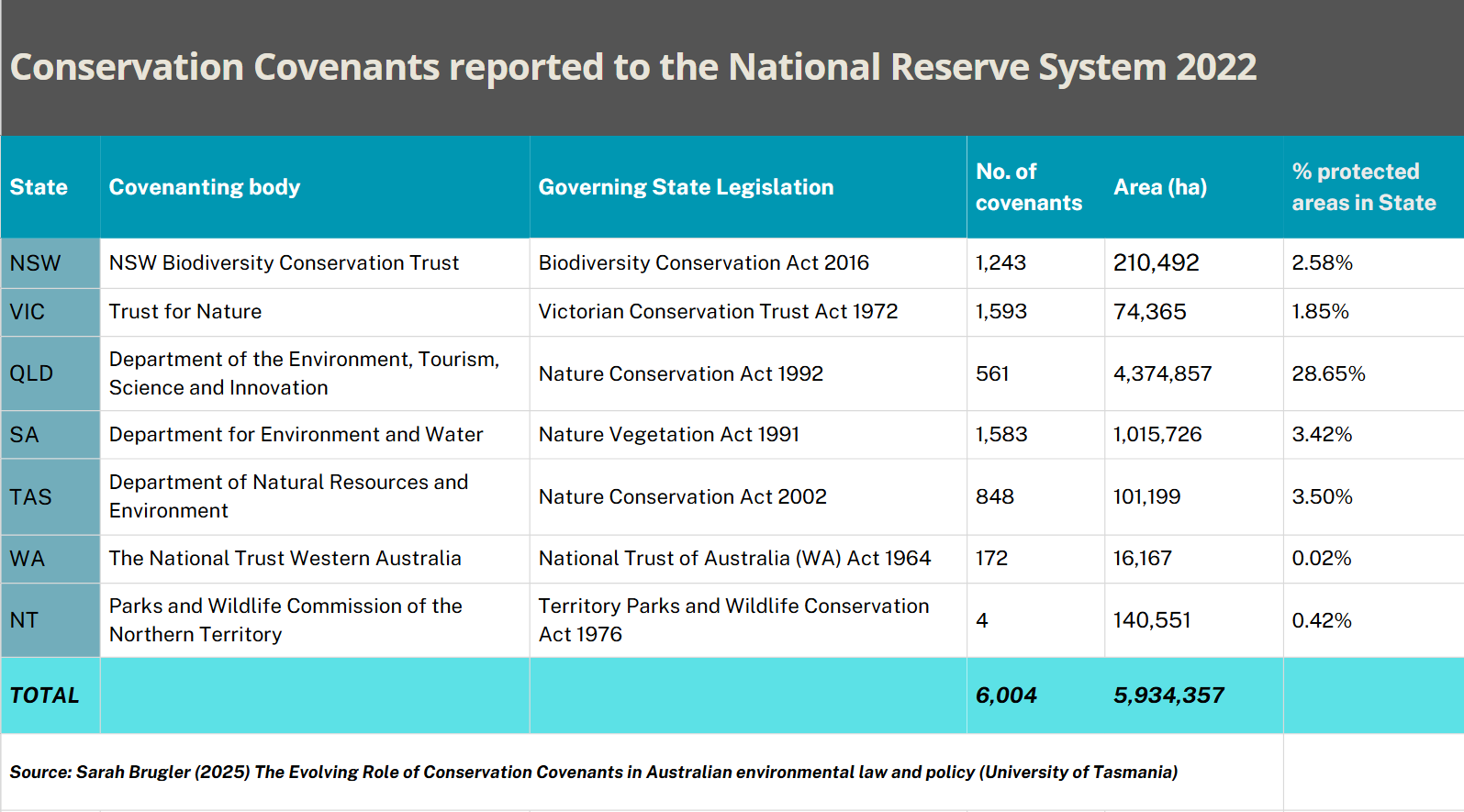
Conservation covenants form the backbone of Australia’s privately protected area network. New data presented by Dr Fitzsimons, undertaken by PhD student, Sarah Burgler, shows:

  • Victoria has the most covenants numerically
  • Queensland has fewer covenants, but a very large area is protected
  • NSW is the fastest-growing state, thanks in part to a major policy shift
  • South Australia has grown slowly since an initial surge in the early 2000s
  • Western Australia is growing more slowly than other states
Why NSW is surging

NSW’s growth is strongly linked to a shift from a government-run program to a trust-based model (similar to Trust for Nature) and the introduction of stewardship payments – annual, guaranteed payments attached to covenant obligations. This model has proven especially attractive to farmers who gain:

  • A stable income stream
  • Predictable financial support in variable climate and market conditions
  • Recognition of conservation as part of a working property
  • Challenges on the horizon: climate change, complexity and competing land uses

Dr Fitzsimons outlined several emerging challenges and opportunities.

1. Covenants must adapt to climate change

Climate impacts – heatwaves, wildfires, sea-level rise – will reshape ecosystems. This raises questions:

Should covenants include rolling boundaries to allow habitats to shift?

How can landholders be supported as vegetation quality changes?
What will climate-resilient covenants look like in practice?

2. The landscape of incentives is growing more complex

Landholders now face multiple programs:

  • Carbon markets
  • Biodiversity markets
  • Nature Repair Market projects
  • Land for Wildlife
  • Covenants

Choosing the right model – or combination – requires clearer guidance and careful sequencing; in other words, getting the sequencing wrong may preclude eligibility for some of these if others have already been implemented.

3. Second-generation covenantors will have different needs

Many covenants were signed by passionate, first-generation owners. Future owners may:

  • Have different motivations
  • Have different financial situations
  • Require more support to maintain covenant obligations

4. Restoration covenants will become more important

Protecting high-quality remnants is no longer enough. Australia needs large-scale restoration. However, restoration:

  • Is more complex
  • Requires more oversight
  • Requires different policy settings and incentives

5. Land-use competition is intensifying

Renewables, critical minerals, housing and agriculture are all placing pressure on land availability. Strategic planning will be essential.

Bringing the insights together

Across both Dr Archibald’s and this talk, a shared message emerged: Private landholders are essential to Australia’s conservation future. According to Dr Fitzsimons:

  • They are already caring for vast areas of the country.
  • They are motivated by a mix of passion, purpose and stewardship.
  • They need supportive, fair and flexible policy settings.
  • They play a crucial role in connectivity, refugia, climate adaptation and ecosystem services.

Covenants remain one of the most powerful tools available to secure biodiversity forever. But for covenants to fulfil their potential, Australia needs:

  • Better financial and non-financial incentives.
  • Strong national recognition of covenantors.
  • Simplified and equitable tax and rate frameworks.
  • Support for future covenant owners.
  • Policies aligned with climate adaptation and restoration needs.
The role of LCV

Land Covenantors Victoria is uniquely positioned to:

  • Advocate for equitable incentives.
  • Represent covenantors to government and agencies.
  • Share knowledge, science and peer support.
  • Strengthen the recognition of covenantors as essential contributors to Australia’s biodiversity goals.

With member leadership and growing research partnerships, LCV is helping shape the next generation of policy and practice for private land conservation.

*LCV holds guest speaker events quarterly in its ‘home base’ at the Royal Society of Victoria in Melbourne CBD. They are always interested in hearing from conservation and covenanting leaders. Please reach out if you wish to become a member, friend or presenter.

Private land covenants: why landholders act — and why it matters

Across Australia, private landholders are playing an increasingly active role in restoring and protecting habitat, using covenants as a protection mechanism, but what motivates them to do so?

At BioDiversity Legacy, we work closely with people who may already have conservation covenants on their land or are deciding whether to do so. Alongside this, our Local Landholding Entity (LLE) model offers another pathway to permanent protection, transferring land into a dedicated, community-led not-for-profit structure.

These approaches are not competing solutions. Rather, we see conservation covenants as complementary to the protections enabled through the LLE model, together strengthening Australia’s private land conservation estate.

Understanding what motivates landholders to choose these pathways – and what supports them to care for land over the long term – is essential if Australia is to meet its biodiversity commitments.

To help inform our work, we regularly engage with sector partners, including the Australian Land Conservation Alliance and Land Covenantors Victoria (LCV). Recently, LCV hosted two leading researchers, Dr Carla Archibald and Dr James Fitzsimons, who shared local and global insights into landholder motivations for covenanting and the policy settings needed to scale impact.

This two-part blog series explores those insights. In this first piece, we focus on Dr Archibald’s research into why landholders adopt conservation covenants and what drives long-term stewardship.

A second article, to be published in March 2026, will examine Dr Fitzsimons’ research on the urgent role governments must play if conservation covenants are to help Australia meet its national biodiversity goals.

What are covenants?

Before we delve into this exploration, let’s start with the basics. What is a covenant?

A conservation covenant is a voluntary, legally binding agreement between a landholder and an authorised body to protect and care for land with important natural, cultural and/or scientific values. The landholder retains ownership and can continue to live on and use the land, while agreeing to manage all or part of it in ways that conserve its identified values, in partnership with the authorised body.

Authorised bodies (often called covenant scheme providers) may include not-for-profit organisations, government agencies or local councils that have the authority to enter into conservation covenants with landholders; for example, Trust for Nature in Victoria, Biodiversity Conservation Trust in NSW and the Tasmanian Land Conservancy (TLC).

Why landholders choose conservation covenants – insights from Dr Archibald

For more than a decade, Dr Carla Archibald has studied private land conservation and the social dynamics behind environmental behaviour. Her recent research – based on a survey of 475 landholders in New South Wales – asked a simple but powerful question: What drives someone to commit their land to long-term conservation?

Conservation is already happening quietly, everywhere!

One of the most striking findings of the survey is just how widespread voluntary conservation already is in NSW. Over 80% of surveyed landholders were actively undertaking conservation management – weed control, revegetation, pest and feral animal control – independent of any formal agreement.

Only 15% of those surveyed had a legally binding conservation covenant, but another 39% were involved in programs such as Land for Wildlife. This suggests an enormous, untapped pool of landholders who are already engaged but may need additional support, confidence or incentives to take the next step.

The four key influences on covenant adoption

Dr Archibald’s research identified four key drivers:

Existing conservation engagement

Landholders already actively caring for their land were eight times more likely to adopt a covenant. This points to a progressive pathway: care – commitment – covenant.

“People who are passionate about conservation are the ones willing to make a permanent commitment,” said Dr Archibald.

Time and capacity

Those with more time to undertake stewardship were 1.6 times more likely to covenant their land. Surprisingly, retirement status did not influence adoption, suggesting time, not age, is the real barrier.

Suitable land available

Landholders who knew they had ecologically valuable or suitable areas were twice as likely to adopt. Property size itself didn’t matter. Agencies could therefore target properties with high conservation potential – focusing on ecological fit, not acreage.

Income and incentives

Financial incentives ranked lower than expected. However, landholders earning income from their land were more likely to adopt covenants.

This shows:

  • Conservation can co-exist with primary production
  • Environmental markets in NSW are making conservation a sound business proposition
  • Conservation actions can enhance farm productivity and ecosystem services
  • A pathway that supports livelihoods and landscapes

The overarching message from Dr Archibald’s research is clear – covenants are most successful when they align biodiversity outcomes with the social and economic realities of landholders. Programs that acknowledge landholder capacity, income reliance and ecological assets have the best chance of expanding uptake.

She noted that policymakers are increasingly recognising this and praised LCV’s successful advocacy work – particularly the push for land tax exemptions for covenantors.

Looking ahead, Dr Archibald hopes to explore how sustainable finance mechanisms could underpin long-term conservation and community resilience.

EcoGipps: Growing a Living Legacy in Central Gippsland

For the BioDiversity Legacy team, this story is deeply meaningful. It carries the seeds of our very existence and the first green shoots of a pioneering land-conservation movement - one that has the potential to safeguard hundreds of thousands of acres in the decade ahead.

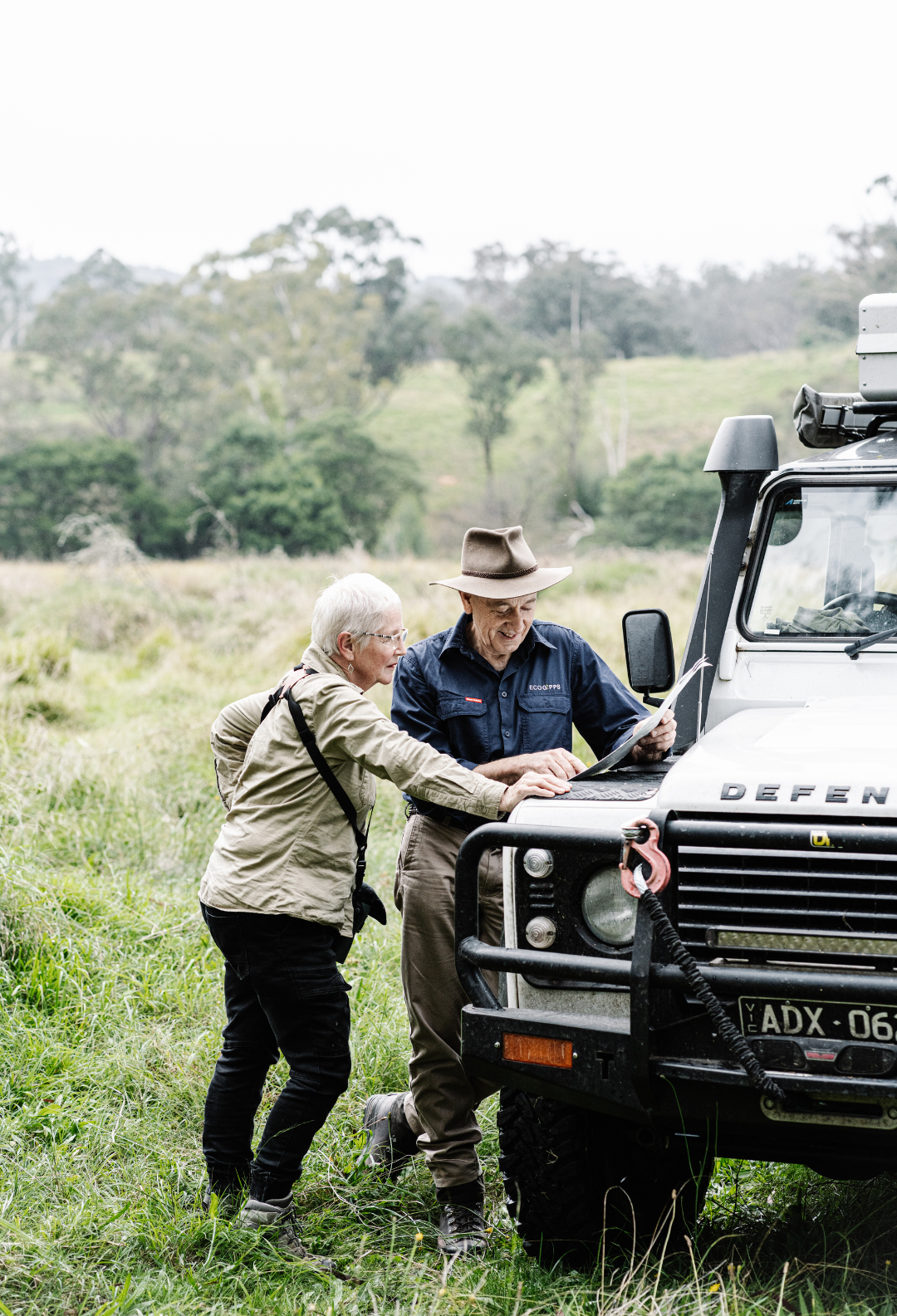
At its heart is a 105-hectare (259-acre) property - North Paddock - in Maffra West Upper, Central Gippsland - land that the Phillipson family has generously donated to BioDiversity Legacy for permanent protection and long-term stewardship.

This remarkable act of generosity - one of three donations planned by Jim, Heather, David and Kate Phillipson - was years in the making, involving thoughtful conversations about succession, care, responsibility and what it truly means to leave a living legacy.

The Backstory

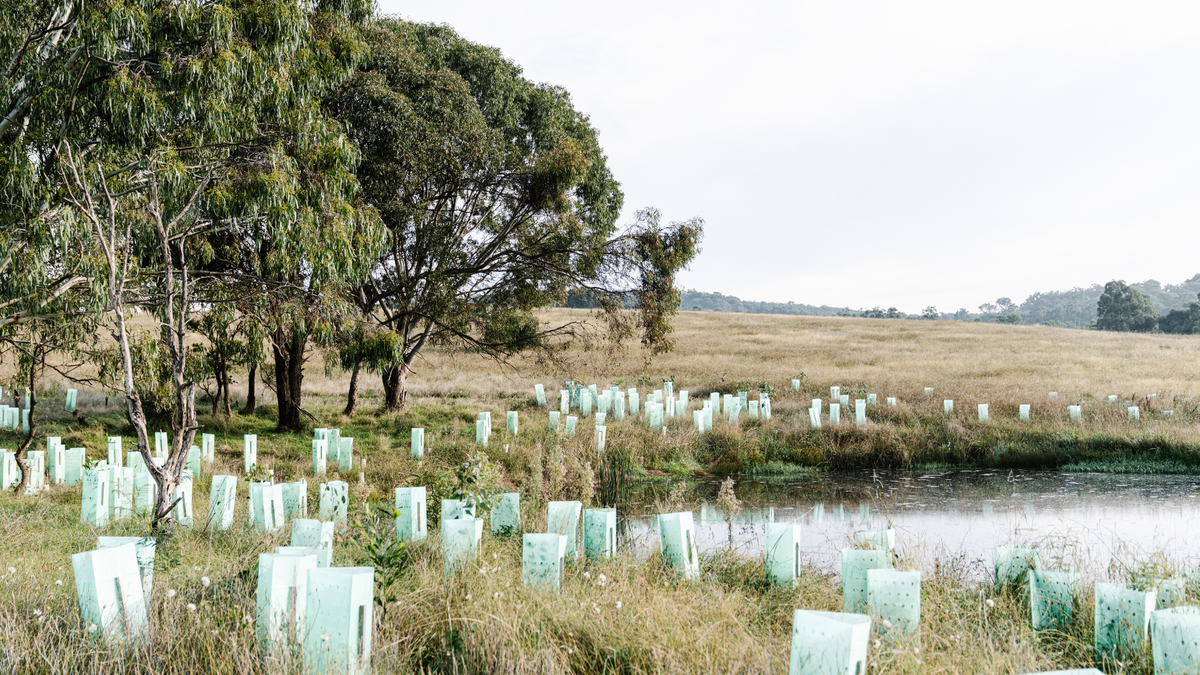
Jim and Heather Phillipson grew up on farms around Sale in Central Gippsland. Jim went on to become a highly respected business leader and Heather a dedicated community nurse. Wanting their children, David and Kate, to experience the same grounding in nature, Jim and Heather purchased a 36-ha (90-acre) property on the Wirn wirndook Yeerung (Macalister River). They began restoring the old grazing paddock by replanting trees, nurturing remnant grasslands and riparian woodlands and protecting regionally significant plant species.

Along the way, Jim and Heather encountered passionate ecologists, conservation groups and land managers who helped shape their understanding of landscape stewardship. Over time, they came to realise that real impact comes from thinking beyond a single property: habitat must connect, landscapes must link, and communities must act together.

With that in mind, the family purchased three additional properties - covering approximately 358 ha (884 acres) from Maffra West Upper to the rugged foothills of the Victorian Alps.

For decades, the properties were used as grazing stops for cattle herded up to the high country for summer grazing, a practice now restricted due to its environmental impacts.

The Phillipsons saw another future for this land.

Establishing the EcoGipps Venture

Driven by their growing vision, the Phillipsons created EcoGipps - a venture dedicated to managing their properties and developing an on-site conservation and learning hub. Today, EcoGipps supports school groups, international volunteer workers (WWOOFers), hikers, field naturalists and birdwatchers - offering a place to learn, contribute and connect.

Immersed in this work, the family gained deep insights into the challenges faced by landowners seeking to protect, restore and share their property/ies for conservation. They also saw their local efforts against the larger backdrop of climate change and biodiversity loss.

Engaging with groups such as Land for Wildlife and Trust for Nature, the family progressively placed conservation covenants on the properties. While everything was progressing well, one persistent question remained: "What happens to the land when we can no longer care for it?"

The Phillipsons soon discovered this question echoed across the private land conservation sector - many landholders had the will and passion to restore their properties, but no clear pathway for ensuring those efforts would endure.

Enter BioDiversity Legacy

BioDiversity Legacy was established to provide a solution to this very problem - by creating clear, practical pathways for landholders, communities, partners, and donors to ensure enduring protection and stewardship of land for future generations. This unique approach places land in secure, not-for-profit ownership structures, backed by strong legal and governance safeguards that remove it from the property market, protect it from future sale or development and ensure it is responsibly stewarded over the long-term.

In 2025, the Phillipsons donated North Paddock on Gunaikurnai Country, to BioDiversity Legacy. This was a moment that crystallised what the Phillipsons had been looking for: a trusted, long-term partner to carry their legacy forward.

The Significance of North Paddock: Biodiversity values

North Paddock's ecological significance is considerable - meeting four objectives of the Trust for Nature Statewide Conservation Plan and rated as ‘Very High’ conservation value. Several habitat types have also been identified as depleted or endangered by the Department of Energy, Environment and Climate Action (EVC benchmarks).

Habitat includes lowland and herb-rich woodland forests, Swamp scrub, White and Red Stringybark and Blue/Red Box eucalypts and a rare tea-tree soak. Read more about the types of habitat found on the property, as well as rare plants, wildlife and birds (read more here).

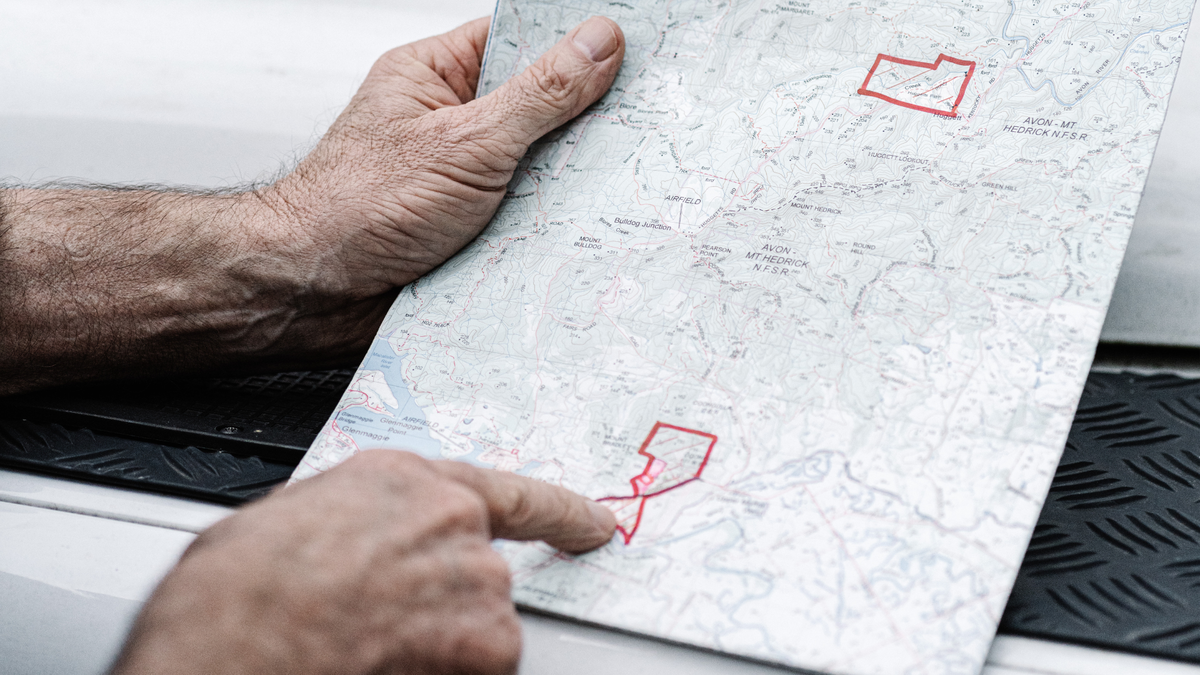
More importantly, the property represents a key biolink within a vast core habitat area linking Coongalla Bushland Reserve with the Avon–Mt Hedrick Scenic Reserve and onward to the Victorian Alps.

With the transfer of North Paddock complete, the Phillipsons are now advancing plans to transfer their two additional properties, totalling 253 hectares, into BioDiversity Legacy’s safe ownership structure in the coming years.

BioDiversity Legacy is also working closely with the Phillipsons to further develop the EcoGipps venture into a stewardship entity that can take care of managing the properties into the future.

Heather Phillipson will continue leading restoration efforts at North Paddock, with Caroline Trevorrow joining as a dedicated Stewardship Coordinator to oversee the organisation’s activities. Thus, the initiative is creating local employment in conservation, as well as the education and community engagement opportunities that are at the core of the EcoGipps mission.

A Living Legacy for Future Generations

The transition of North Paddock into BioDiversity Legacy’s care marks a significant milestone for the private land conservation movement. It demonstrates a clear, practical pathway for landholders who want to permanently protect their land, ensure best-practice stewardship and contribute to something much bigger than themselves.

The Phillipson family’s vision - and their courage to act on it - has created a model that others can follow.

It reminds us that conservation is not only about restoring landscapes. It’s about restoring connection: to Country, to community and to the future. Their story shows what becomes possible when people choose to give back to the land that has given them so much. And it lights the way for others who wish to leave a living legacy for future generations.

Connecting Country: Growing a Landscape Vision on the Far South Coast

BioDiversity Legacy (BDL) is engaging with a growing number of landholders on the Far South Coast of New South Wales who are interested in exploring how BDL’s land protection pathways can not only safeguard individual properties but help communities connect their landscapes and expand their conservation ambitions.

In October, BDL Communities & Stewardship Manager, Robyn Edwards, visited a remarkable 27-ha property adjoining Tilba Tilba Lake in the Gulaga/Eurobodalla region that has been lovingly restored over the past 45 years by members of the Tilba Lake Community (TLC).

The property, once cleared and degraded, has been transformed into a thriving haven for biodiversity, with over 200 bird species recorded, a healthy Diamond Python population, returning Long-nosed Bandicoots and nationally endangered species, including the Glossy Black-Cockatoo and Hooded Plover.

During the visit, Robyn joined Local Land Services NSW and TLC members Geoff Pryor, Noel Pratt, Dr Liz Dennis and her son, Dr Clancy Dennis, in a wide-ranging conversation about the property’s natural and cultural values, land transition pathways and the Biosphere Region proposal originally developed by the Tilba Environment Landcare Group as part of the Tilba Chamber of Commerce strategy review in the wake of the 2019–20 bushfires.

“A big part of our role at BioDiversity Legacy is guiding communities through a progression - from connection and learning to agency, active hope and, ultimately, positive, lasting conservation pathways,” says Robyn.

“It was inspiring to meet the landholders, learn about the Yuin people’s connection to Country and see how the Tilba property has been brought back to life. We’ll do what we can to support this group and the wider community to pursue their landscape vision.”

Photo top: Shareholders of the Tilba Lake Community Pty Ltd property enjoyed conversations with BioDiversity Legacy's Robyn Edwards. Left to right: Noel and Geoff Pryor, Robyn Edwards, Liz Dennis and son Clancy.

Empowering Landholders and Communities: Reflections from the 2025 ALCA Conference

In October, BioDiversity Legacy joined landholders, Traditional Owners, scientists, and conservation organisations from around the country at the 2025 Australian Land Conservation Alliance Conference, held in Gimuy (Cairns).

The conference theme - Scaling Up: Local Action for Global Solutions - echoed what drives our work at BioDiversity Legacy every day: empowering and facilitating landholders and communities to protect the land they love - from early steps in land stewardship to formal and lasting protection.

Shared purpose and momentum

The Australian Land Conservation Alliance (ALCA) is the national peak body for organisations working in private land conservation, bringing together people who are actively restoring and safeguarding nature on privately managed land. This year’s event created a powerful space for sharing knowledge, building partnerships and exploring innovative models for long-term protection.

BioDiversity Legacy was proud to be announced as one of ALCA’s newest member organisations, alongside the National Landcare Network - a milestone that reflects our growing role in this national movement (see the full list of ALCA members here).

Contributing to the conversation

BioDiversity Legacy staff were delighted to play an active role in the Land Conservation Forum for Landholders on Tuesday, 7 October, with our Head of Conservation Engagement & Partnerships, Dixie Fitzclarence, co-presenting a session with Andrew and Angus Cleary from Nuggan Sanctuary, who shared their family’s inspiring conservation journey and their work to secure lasting protection for their land.

BioDiversity Legacy's Far North Queensland Biolink Coordinator, Keith Smith (who is also involved in Queensland’s Private Protected Area Program), participated in the Ask an Expert session, offering insights into land management and conservation practices.

"The week was filled with insight and connection. MC Sean Dooley kept spirits high and Peter Garrett’s closing remarks left the room energised for the road ahead. We left Cairns inspired and looking forward to reconnecting with everyone in Lutruwita/Tasmania next October for ALCA26 and in Naarm/Melbourne for the 2027 International Land Conservation Network Global Congress,” said Dixie.

Biolink Coordinator recognised as a trusted voice for nature

Congratulations to BioDiversity Legacy South Gippsland Biolink Coordinator, Stuart Inchley, who has been selected to join an august list of conservation experts in the new Nature Media Centre, a joint project of the BioDiversity Council, Pew Charitable Trusts and the Australian Land Conservation Alliance.

The Nature Media Centre was recently established as a 'non-partisan resource’ to give journalists access to conservation experts working in areas as diverse as regenerative farming, art and design, land management, ecology, urban planning, academia, citizen science, Indigenous knowledge and even ‘astrotourism’.

Many of these individuals do not have high media profiles yet are highly influential in their local communities and are doing amazing things on the ground. As such, they are well placed to provide insights into the challenges and complexities of environmental protection and management.

In his capacity as Biolink Coordinator, Stuart is connecting landholders – many of whom are working in isolation – across South Gippsland, strengthening communities willing to restore and protect habitat on private land.

With partner Victoria, Stuart also looks after a 300-acre covenant-protected property, Tarwin River Forest, in South Gippsland. The property, which is home to many rare and threatened species such as the Gang-gang Cockatoo, Pilotbird and Strzelecki Burrowing Crayfish, has a significant population of Critically Endangered Slender Tree-ferns in some magnificent cool temperate rainforest gullies.

Stuart and Victoria have first-hand experience of the personal and financial challenges of stewarding private property for conservation, including threats from forestry, climate change and feral animals.

They regularly bring the community together for events on the property, where they share their experiences, their love of these landscapes, community-led solutions and active hope.

Stuart joins Diana Droog, secretary of Land Covenantors Victoria, in the Nature Media Centre as a trusted voice for private land conservation.

We look forward to what Stuart, Diana and others have to say in the coming months as they shine a light on Australia’s unfolding environmental crisis and help newsmakers tell compelling stories that educate and inspire action.

Connecting with communities on Far South Coast of NSW

BioDiversity Legacy (BDL) continues to build networks and engage with conservation communities on the Far South Coast of NSW from Eden to Tathra, Bermagui to Moruya, and beyond.

It may be one of the most beautiful regions in Australia, but the Far South Coast faces numerous threats to its biodiversity - from habitat loss to logging, agricultural activities, invasive species and bushfires.

In June, BDL's Head of Conservation Engagement & Partnerships, Dixie Fitzclarence, and Community & Stewardship Manager, Robyn Edwards, headed to the small town of Towamba, near Bega, to meet the community and participate in a workshop aimed at helping them identify critically endangered Threatened Ecological Communities (TEC) within the River Flat Eucalypt Forest.

The event, coordinated by the Towamba Valley Landcare Group in association with the Far South Coast Conservation Management Network, involved presentations by Jackie Miles, a highly knowledgeable local botanist who explained the main diagnostic features of the TEC, South East Local Land Services Officer, and Annie Hobby, who provided an update on the status, range and distribution of this TEC and what communities can do to restore these ecosystems.

Dixie talked about BDL’s role supporting landholders, community groups, environmental organisations and others to protect the land they love for future generations. Robyn’s talk focused on BDL-supported work with Wildlife Unlimited to protect threatened species, including the Spot-tailed Quoll and Brush-tailed Rock Wallaby, as well as plans to extend this work to protect native species across a broad region, from Victoria to the South Coast.

"It was an inspiring day, connecting with landholders who are undertaking protection and restoration activities on their property or in the local landscape, and to share with the community the role BDL has to play in permanent protection through facilitating community ownership of significant biodiverse areas," said Robyn.

The event was supported by the Australian Government Natural Heritage Trust and the Saving Native Species Program delivered by South East Local Land Services, a member of the Commonwealth Regional Delivery Partners panel.

Land Covenantors Victoria unites for conservation

*The following editorial, published by the International Land Conservation Network (ILCN) in March 2025, is by LCV president Peter Mulherin and Australian Land Conservation Alliance Permanent Protection Method Project Manager, Cecilia Riebl, who also acts as Australia’s ILCN Regional Representative

Local Action, Lasting Impact

The following editorial, published by Land Covenantors Victoria (LCV), an organisation energising the private land conservation movement across Victoria and bringing communities together to take meaningful action. Established in 2021 with support from the Rendere Environmental Trust and Trust for Nature, LCV is the first formal network to unite landholders who have adopted conservation covenants and other on-title agreements to protect biodiversity on their properties.

“We are living in a time of great challenge, with biodiversity loss, global warming, political instability and the relentless advance of extractive industries compounding these threats,” said LCV President Peter Mulherin.

“It’s easy to feel overwhelmed. However, by empowering private landowners to take meaningful action within their own communities, we can restore a sense of control and optimism.”

LCV members play an active role in advocating for policy reform. Their efforts include successfully securing automatic land-tax exemptions for landholders with Trust for Nature covenants - an important recognition of the public environmental value these protected areas provide. More broadly, LCV brings together people and organisations with diverse levels of experience and expertise to exchange ideas, share success stories and support peer-based learning.

“One of the most rewarding aspects of this work is being part of a local network of landholders—feeling connected to a community of like-minded individuals making tangible changes to benefit local biodiversity and future generations,” Peter said.

LCV hosts field days and events on properties across the state. In one recent event in Gippsland, Landcare representatives, Trust for Nature, philanthropists, farmers and local politicians gathered in a town hall to hear case studies showcasing conservation initiatives led primarily by volunteers and local landholders.

The photo above shows participants at LCV’s first field day, held at Wirra-lo, a 180-hectare private property in Murrabit. Peter also acknowledges the challenges these organisations face in caring for nature on behalf of the broader community.

“Their work provides immense social and environmental benefits, with no financial reward but enduring value for their communities,” he said.

By fostering collaboration and raising awareness about the importance of conservation covenants, LCV is making real progress toward its long-term vision: a future in which private land conservation is the norm, not the exception.

Secret Link