Spot-tailed Quoll Recovery Program

Last chance effort to protect a fierce but fragile icon species

The Spot-tailed Quoll – also known as the Tiger Quoll – is one of Australia’s most extraordinary predators. Yet despite its ecological importance, this fierce, secretive marsupial is now listed as Endangered under the Commonwealth’s Environment Protection and Biodiversity Conservation Act 1999 and Victoria’s Flora and Fauna Guarantee Act 1988.

Once widespread across Victoria, the species has suffered a dramatic decline since European settlement. Hunting, habitat loss, and predation by feral animals have reduced Spot-tailed Quoll numbers by more than 50%. Today, the Upper Snowy River region in Gippsland is the species’ last stronghold in the state – but even here, the population continues to fall.

In 2024, that trajectory sparked action. A network of government and non-government organisations – including the Rendere Environmental Trust, First Nations communities, ecologists, geneticists and dedicated quoll champions – united to apply for a Victorian Government Nature Fund grant supporting a multi-agency recovery effort.
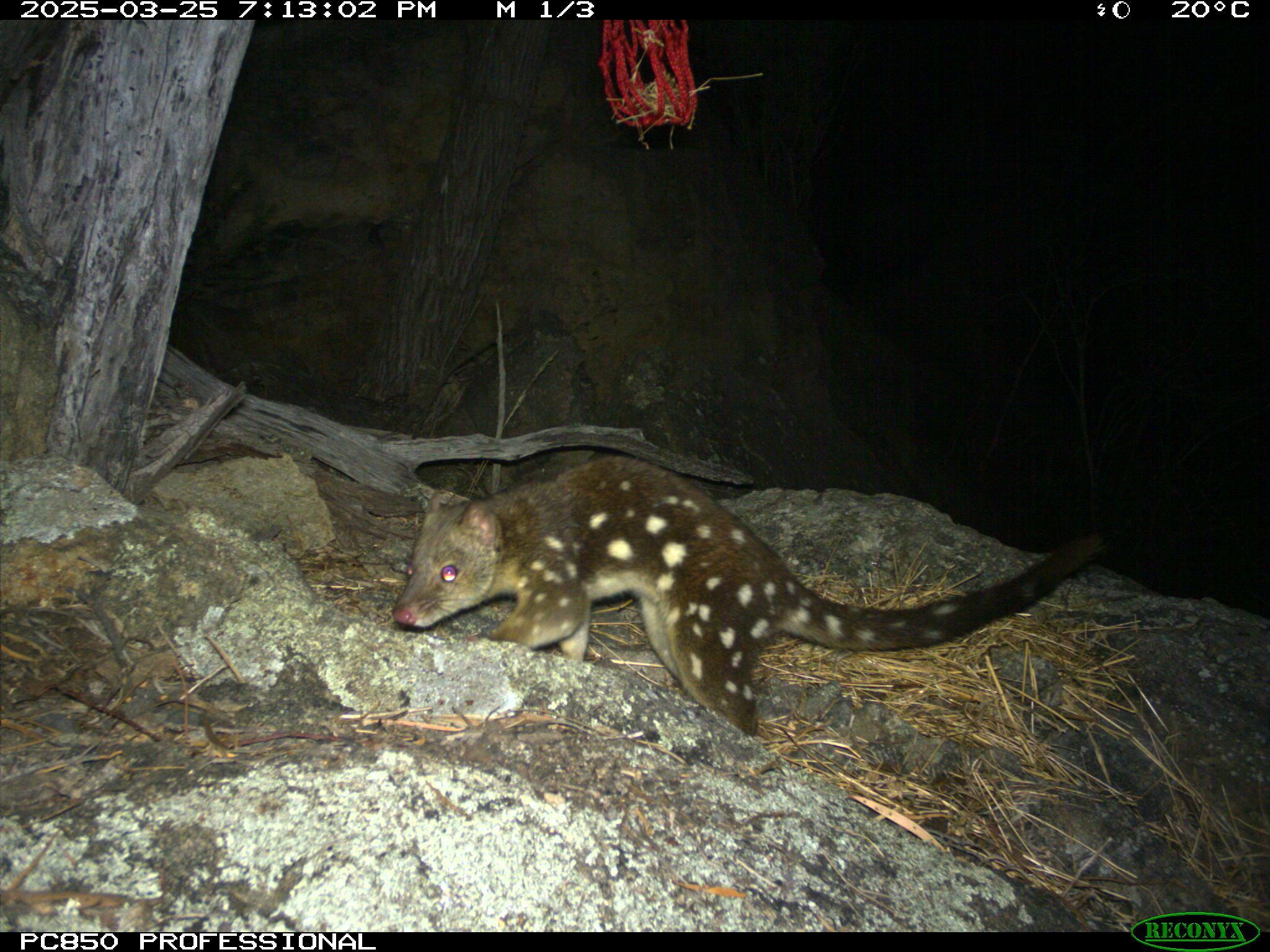
Auspiced and mentored by BioDiversity Legacy and led by Wildlife Unlimited, the Spot-tailed Quoll Recovery Program is now underway. Researchers are venturing deep into the rugged wilds of East Gippsland, gathering critical data on quoll numbers, movements and habitat needs. Their mission is clear: understand what is driving the decline, determine what it will take to halt it, and ultimately return quolls to the Country they once thrived in.

A key component of the program involves genetic assessments of both wild and captive individuals—work that will guide the development of a robust captive-breeding and translocation strategy in collaboration with Odonata’s Mt Rothwell team.

On the ground, Wildlife Unlimited field teams are trekking remote ridgelines and river valleys, deploying camera traps, studying behaviour and collecting genetic material to piece together the story of surviving quolls.

It’s painstaking work - but it’s infused with hope. Every footprint, every image, every genetic sample helps chart a path toward recovery for one of Australia’s most charismatic and imperiled species.

Land Covenantors Victoria unites for conservation

*The following editorial, published by the International Land Conservation Network (ILCN) in March 2025, is by LCV president Peter Mulherin and Australian Land Conservation Alliance Permanent Protection Method Project Manager, Cecilia Riebl, who also acts as Australia’s ILCN Regional Representative

Local Action, Lasting Impact

The following editorial, published by Land Covenantors Victoria (LCV), an organisation energising the private land conservation movement across Victoria and bringing communities together to take meaningful action. Established in 2021 with support from the Rendere Environmental Trust and Trust for Nature, LCV is the first formal network to unite landholders who have adopted conservation covenants and other on-title agreements to protect biodiversity on their properties.

“We are living in a time of great challenge, with biodiversity loss, global warming, political instability and the relentless advance of extractive industries compounding these threats,” said LCV President Peter Mulherin.

“It’s easy to feel overwhelmed. However, by empowering private landowners to take meaningful action within their own communities, we can restore a sense of control and optimism.”

LCV members play an active role in advocating for policy reform. Their efforts include successfully securing automatic land-tax exemptions for landholders with Trust for Nature covenants - an important recognition of the public environmental value these protected areas provide. More broadly, LCV brings together people and organisations with diverse levels of experience and expertise to exchange ideas, share success stories and support peer-based learning.

“One of the most rewarding aspects of this work is being part of a local network of landholders—feeling connected to a community of like-minded individuals making tangible changes to benefit local biodiversity and future generations,” Peter said.

LCV hosts field days and events on properties across the state. In one recent event in Gippsland, Landcare representatives, Trust for Nature, philanthropists, farmers and local politicians gathered in a town hall to hear case studies showcasing conservation initiatives led primarily by volunteers and local landholders.

The photo above shows participants at LCV’s first field day, held at Wirra-lo, a 180-hectare private property in Murrabit. Peter also acknowledges the challenges these organisations face in caring for nature on behalf of the broader community.

“Their work provides immense social and environmental benefits, with no financial reward but enduring value for their communities,” he said.

By fostering collaboration and raising awareness about the importance of conservation covenants, LCV is making real progress toward its long-term vision: a future in which private land conservation is the norm, not the exception.

Secret Link